

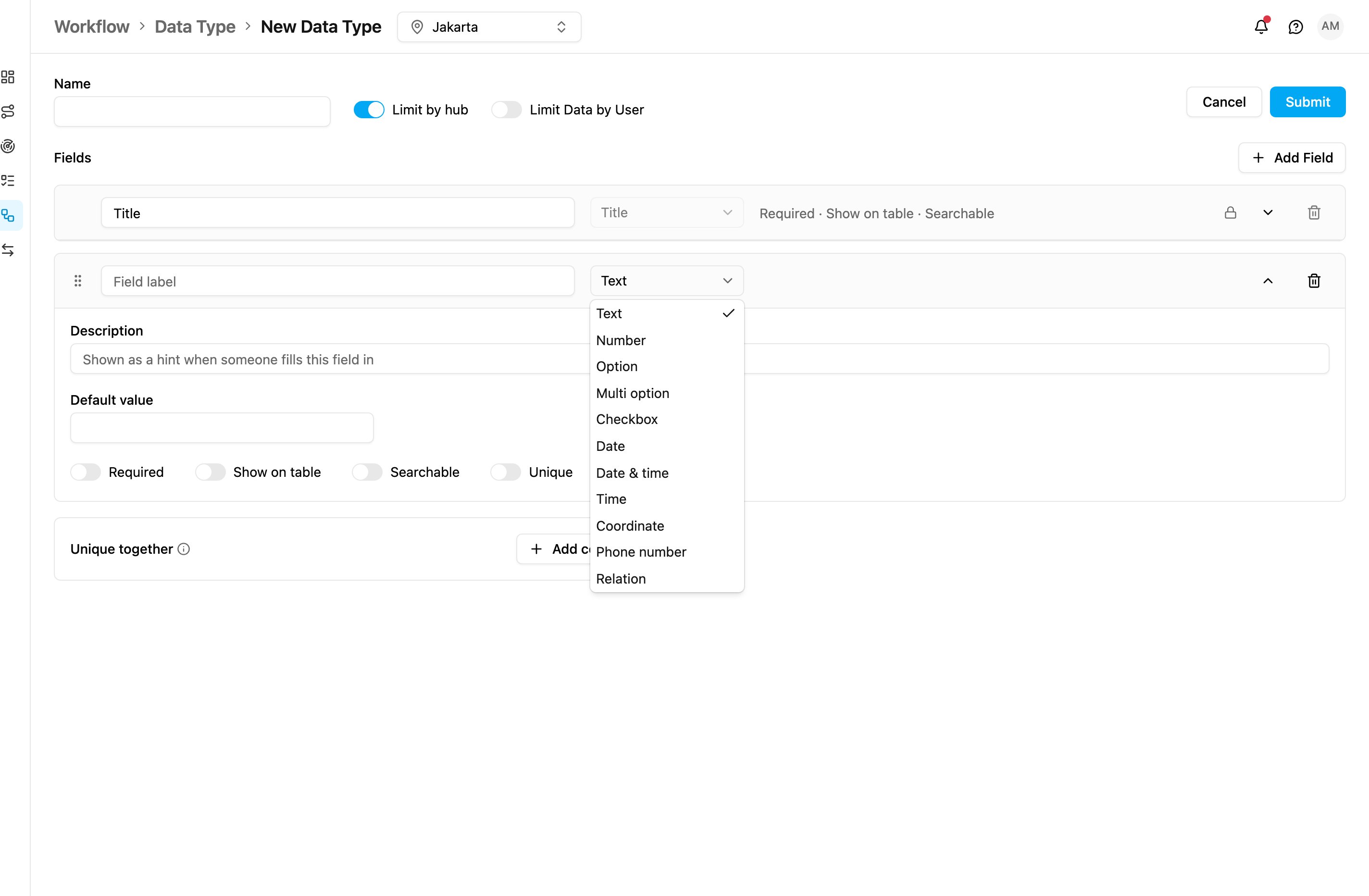
Options
For Option and Multi option, type each choice in Options and press Enter. A field needs at least one option. The same choice can’t be listed twice.Minimum and maximum
- For a Number, the lowest and highest value allowed, and the number of Decimal places.
- For a Multi option, how many choices must be picked at least and at most.
- For Date, Date & time and Time, the earliest and latest value allowed. Each bound is either A fixed value or another date field of the same data type, so an End Date can be required to be after the Start Date. Choose Same or later / Later only for the minimum, and Same or earlier / Earlier only for the maximum.
Relation
A Relation field links each record to another record.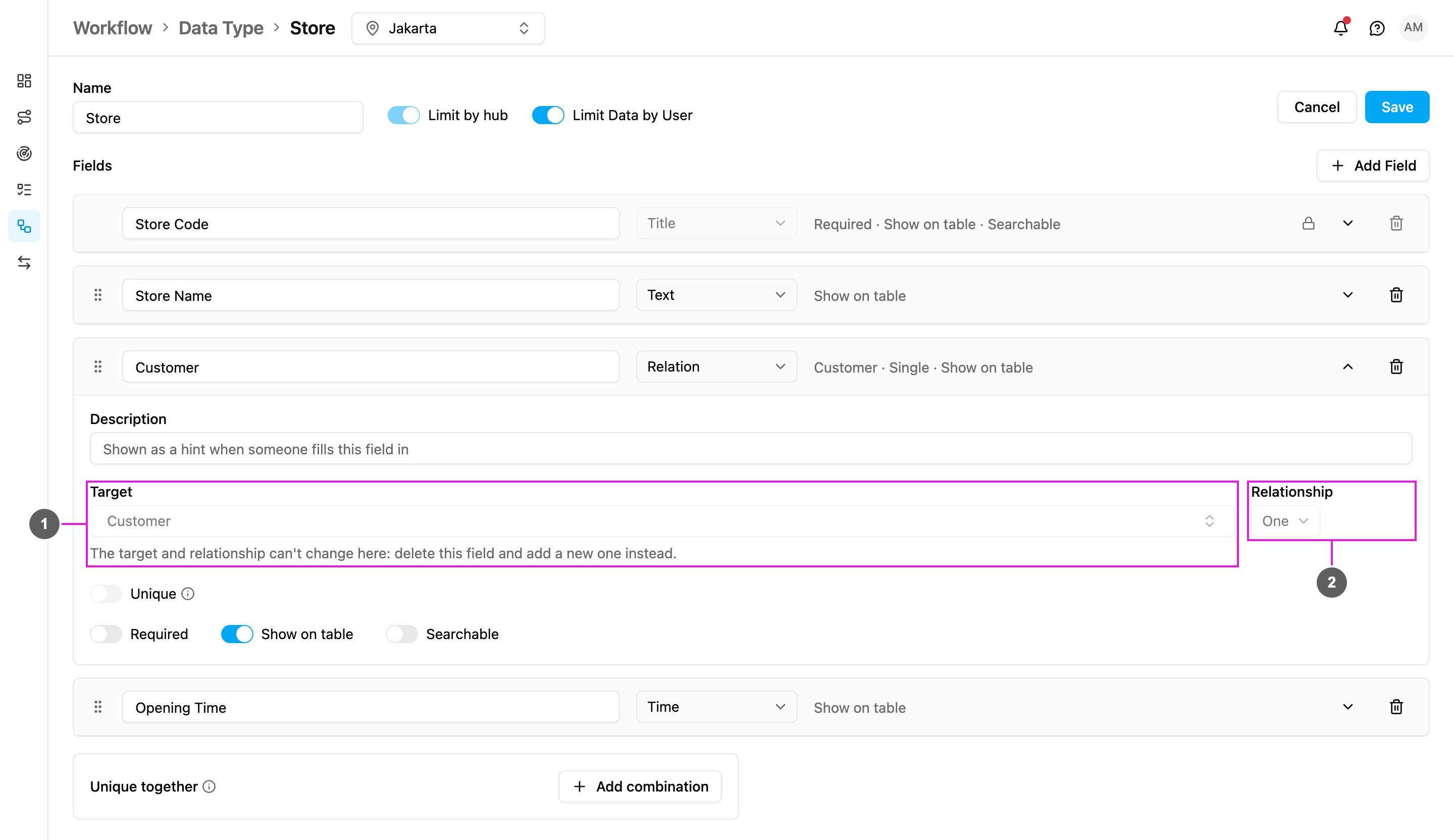
- Target: what the field links to. Choose another of your data types under Data source, or a User, Hub, Vehicle, Role or Task Type.
- Relationship: One links each record to a single target record; Many links it to several.
- Display field: which field of the target to show instead of its Title, for example the store name instead of the store code.
- Limit to the user’s own hubs: for a link to a Hub, people can only pick the hubs they belong to.
- Unique: for a One relationship, only one record may point at the same target, which makes the link one-to-one.
- Searchable: the Data Source search also matches the title of the linked record, so searching a customer’s name finds every store linked to that customer. Only Relation fields have this setting, and at most 5 per data type.
Related records on the target
When another data type links to this one, a Related records section appears on this data type’s page. It lists every field that points here, for example Store: Customer, via its “Customer” field. Turn one on to show the linked records on this data type’s records too: a customer then shows all of its stores. See Linked records.Range types from earlier versions, such as a number range or a date range, can’t be added to a new field.