

Required permission:
- View Data Import
- Create data
Step 1: Check the file
While the file is read, the dialog shows Processing data…. Then a summary appears above Upload.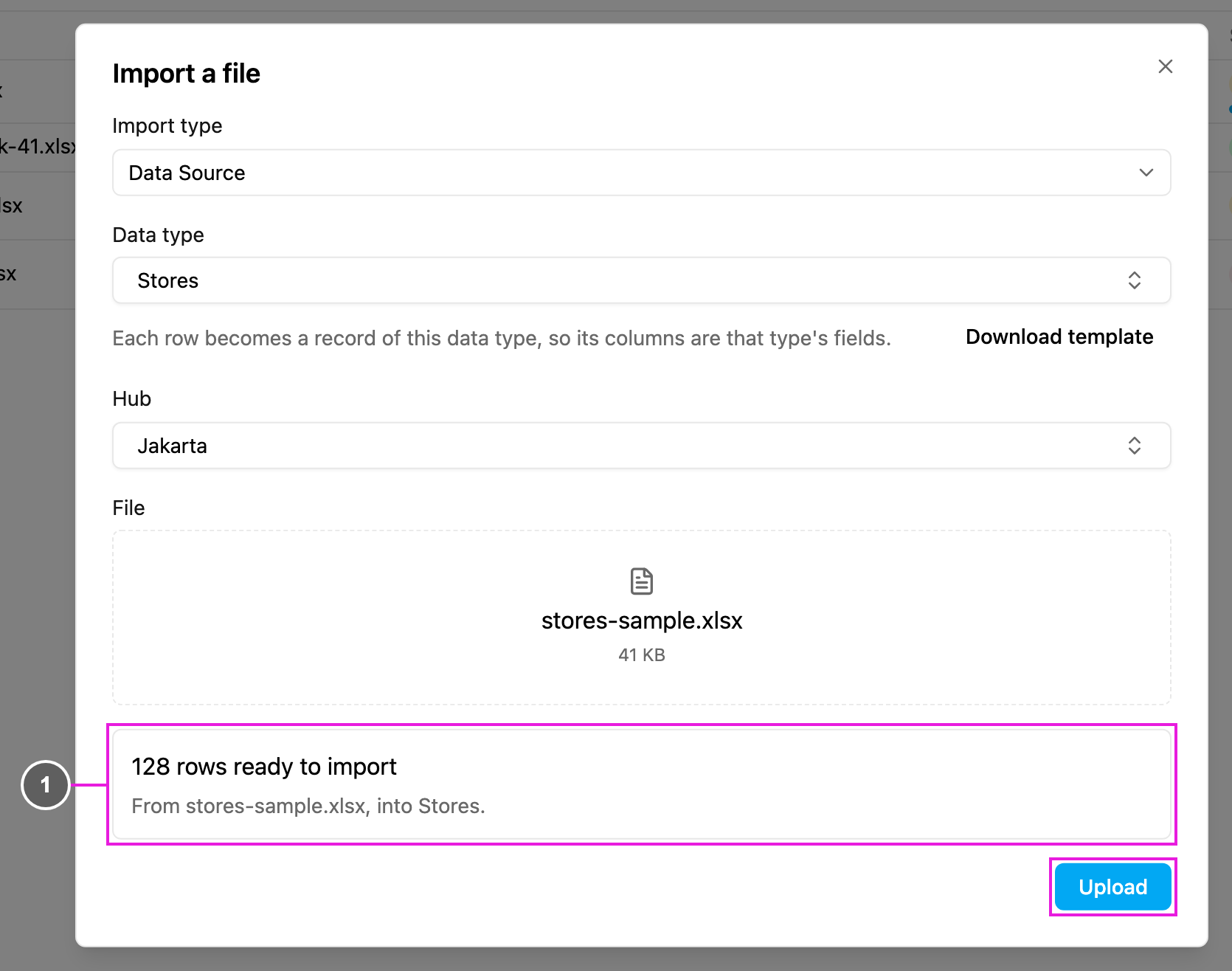
- Rows ready to import: how many rows the file holds, such as 128 rows ready to import, and where they go: From stores-sample.xlsx, into Stores.
* in the template.
Field requirements and outdated templates
If the file has no column for one of the data type’s fields, a red warning appears under the summary and Upload stays disabled.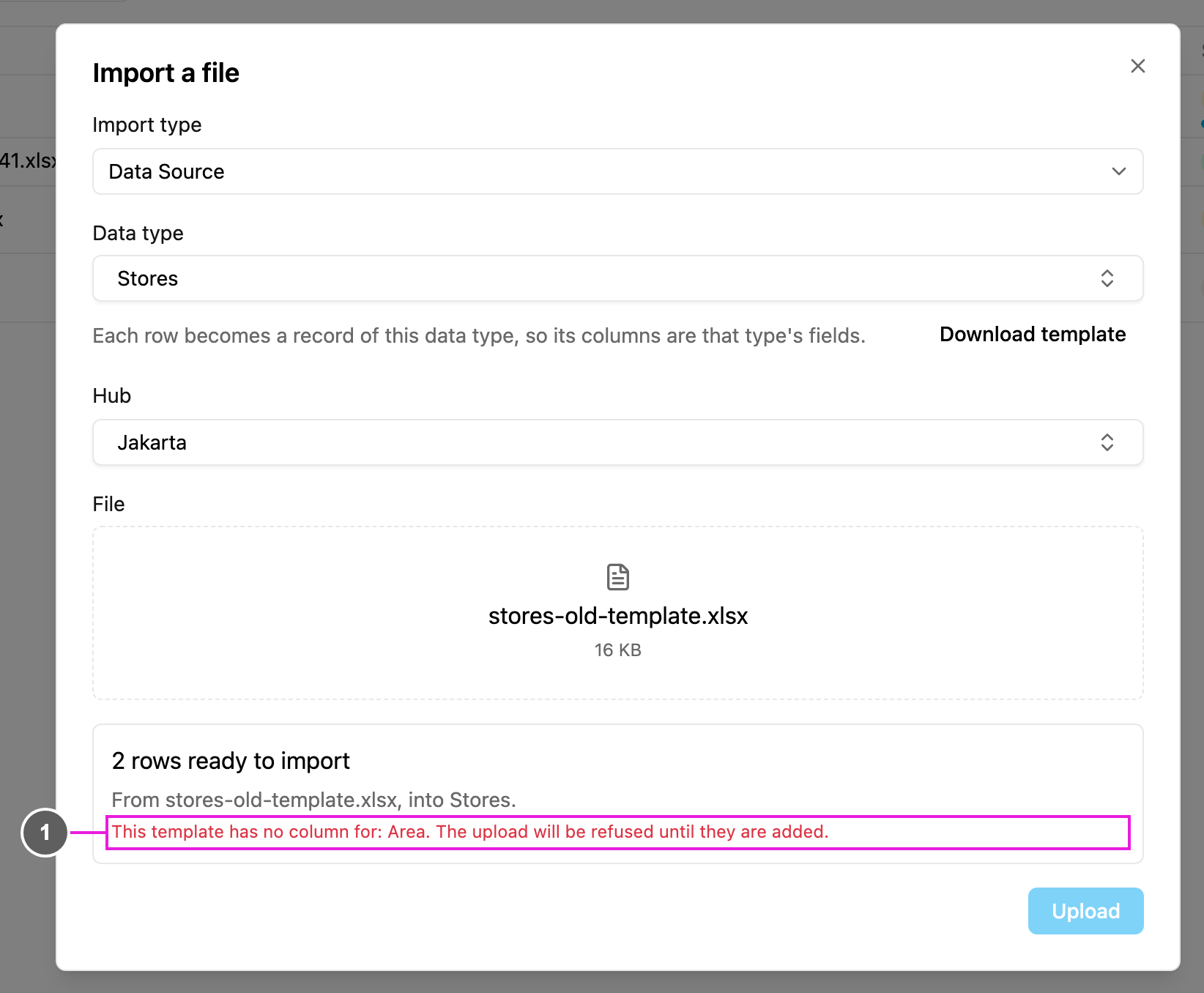
- This template has no column for: …: lists the missing fields, for example Area. The upload is refused until the columns are added.
- One of the column headings is blank, so its rows cannot be matched to a field.
- The file has headings but no rows to import.
- The file cannot be read as a spreadsheet.
- The file is not an .xlsx or .xls file, or is over 20 MB.
Step 2: Confirm and upload
Click Upload. A confirmation opens.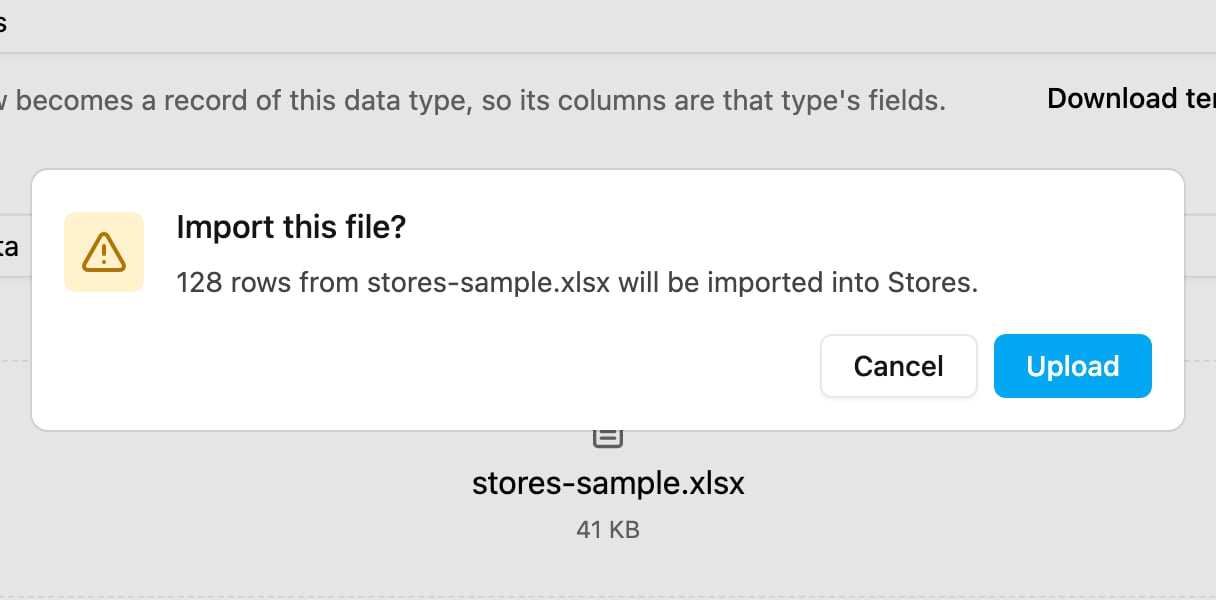
Step 3: Follow the import in the background
The rows are imported in the background, so you can keep working. The new import appears at the top of the import list:- Rows counts the rows imported so far out of the total, with the failed rows in red below, such as 38 failed.
- Status shows Importing with a progress bar, then Done, Partly done or Failed.
Step 4: Download the failed rows
When an import is Partly done or Failed, click Download the rows that did not import in the Actions column. The file holds only the failed rows, with a validationMessage column that says why each row failed. Fix those rows and import that file again. No file shows instead when the import failed before any row was read. Hover over it to see why. Download the uploaded file gives back the file as it was uploaded. Import records are kept for 30 days.Column mapping and preview for tasks
Tasks are not imported from this page. They are imported from Activities › Task, with Bulk under the arrow beside New. That is where you get the steps a task file needs:- View requirements: which task type fields are required, the format each accepts, and the extra sheets for bills, lists and subpages.
- Map your columns: pick which column of your file holds each field, with a preview of its first values. Columns with the same name as a field are matched for you.
- Saved mappings: the mapping is remembered for the task type under the uploaded file’s name. The next file with the same headings opens with that mapping, so you do not map it again.
- Review: check every row before the tasks are created.